Nutrient-Packed Recipe With Beetroot Leaves
So, you’ve got these beet greens sitting in your veggie drawer, maybe a little browned around the edges? If you’re ready to bin them, please don’t. Did you know you could easily create an amazing recipe with beetroot leaves?
These are basically nature’s little green power-up. Think of them like spinach but with a *much* stronger beet flavour, kinda like a cross between spinach and a slightly bitter Swiss chard. Forget those wilting greens in the fridge – beet greens are tough and full of good stuff.
Stick around, and we’ll show you how easy and delicious they can be! Let’s give those greens the spotlight they deserve.
What Are Beet Greens?
Alright, let’s clarify something. When we talk about *beet greens*, we’re specifically talking about the large, pointed, dark green, leafy tops of the beetroot plant. Think of the root (the red, crunchy beet) and the leaves (the beet greens) as two distinct parts, although they grow together initially.
These greens are part of the *Beta vulgaris* family, the very same family that includes chard and spinach. They have smooth, sturdy leaves, often with a slightly pointed tip, and unlike Swiss chard, they don’t have ribs. Their flavour is quite distinct – earthy, slightly sweet, and nutty, with a hint of bitterness that cuts through other flavours surprisingly well.
They look different from your average supermarket kale or spinach, often larger and more elongated, but they’re definitely edible.
Don’t confuse them with the stalks of the beetroot itself; while beet stalks (the thick, crunchy part connecting the leaves to the root) are also edible, they have a very different texture and flavour, often used pickled or roasted. Basically, beet greens are the leaves, and they are delicious when used correctly.
Can You Eat Beet Greens and Stalks?
Yes, absolutely! Both parts of the beetroot plant are perfectly safe and nutritious to eat. The greens, as mentioned, are the leaves, packed with vitamins and minerals, offering a unique, earthy taste that adds depth to salads, stir-fries, soups, and more.
They are generally tender enough to cook quickly, but can also be enjoyed raw if massaged first to soften them slightly and mellow the bitterness. On the other hand, the beet stalks – those thick, crunchy, red-purple stems – are also edible.
They have a denser texture and a more pronounced, sharp, earthy flavour than the leaves. Traditionally, beet stalks are often pickled or roasted slowly to bring out their sweetness. Using both parts maximizes the nutritional and flavour potential of your beetroot plant.
Are Beet Greens Good for You?
That’s a big fat yes! Beet greens are nutritional powerhouses, packing a serious punch of vitamins and minerals while keeping their calorie count relatively low. They’re particularly rich in Vitamin K, which is crucial for blood clotting and bone health, often making them a go-to for those focusing on bone density.
Some of the benefits of beets green are:
- Vitamin A: content supports vision, immune function, and skin health, while
- Vitamin C: acts as an antioxidant, fighting free radicals and boosting your immune system.
- Potassium: a key mineral for regulating blood pressure, supporting heart health, and aiding muscle function.
- Folate: Beet greens provide significant amounts of folate (important for cell function and tissue growth),
- manganese, magnesium, and calcium.
There is also a high concentration of nitrates in beet greens is also being researched for its potential benefits on exercise performance and endurance.
Why You’ll Love This Recipe with Beetroot Leaves
This dish is quick, nutritious, and incredibly versatile. Beet greens are rich in vitamins A, C, and K, as well as iron and calcium, making them a superfood in disguise. Whether you sauté them, blend them into soups, or use them in salads, they add a unique earthy flavor that pairs well with a variety of ingredients.
Ingredients List
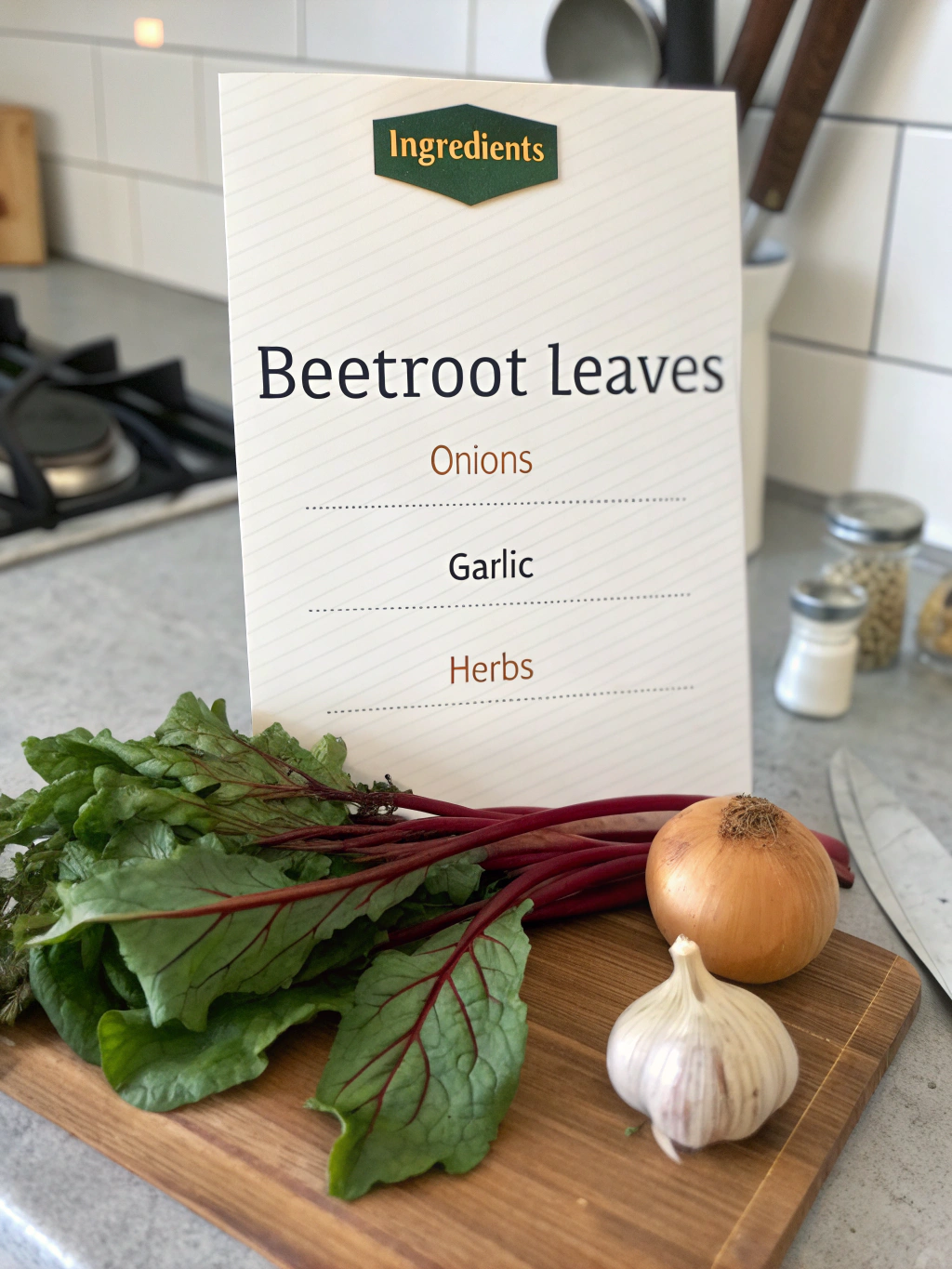
Here’s what you’ll need to make this delicious recipe with beetroot leaves:
- 2 bunches of fresh beet greens (stems removed and chopped)
- 2 tbsp olive oil
- 3 cloves garlic, minced
- 1 small onion, diced
- ½ tsp red pepper flakes (optional for heat)
- 2 tbsp lemon juice
- Salt and black pepper to taste
- ¼ cup crumbled feta cheese (optional)
Substitutions: Swap feta for goat cheese or skip it for a dairy-free version. Add a handful of chopped walnuts for extra crunch.
Timing
Prep Time: 10 minutes | Cook Time: 20 minutes | Total Time: 30 minutes
This dish is ready in just 30 minutes—perfect for a quick weeknight meal. Unlike some leafy green recipes that require longer cooking times, this recipe with beetroot leaves comes together fast while keeping all the nutrients intact.
Step-by-Step Instructions

Step 1: Prepare the Beet Greens
Rinse the beet greens thoroughly to remove any dirt. Pat them dry with a clean towel, then roughly chop the leaves and stems. Set aside.
Step 2: Sauté the Aromatics
Heat olive oil in a large skillet over medium heat. Add the diced onion and sauté until translucent, about 3 minutes. Stir in the minced garlic and red pepper flakes, cooking for another minute until fragrant.
Step 3: Cook the Greens
Add the chopped beet greens to the skillet in batches, stirring occasionally. Cook for 5-7 minutes until wilted and tender. Season with salt and black pepper to taste.
Step 4: Finish with Lemon and Cheese
Squeeze fresh lemon juice over the greens and toss well. If using, sprinkle crumbled feta cheese on top for a tangy finishing touch.
Nutritional Information
Per serving (about ½ cup):
- Calories: 80
- Fat: 6g
- Carbohydrates: 5g
- Fiber: 2g
- Protein: 3g
- Vitamin A: 120% DV
- Vitamin C: 40% DV
- Vitamin K: 300% DV
This recipe with beetroot leaves is a nutritional powerhouse, providing a significant boost of vitamins and minerals in every bite.
Healthier Alternatives for the Recipe
For an even healthier version, consider these swaps:
- Use avocado oil instead of olive oil for a higher smoke point and more healthy fats.
- Add spinach or kale to the mix for extra greens and fiber.
- Skip the cheese or use a nutritional yeast-based alternative for a vegan option.
Serving Suggestions
This versatile dish can be enjoyed in many ways:
- Serve as a side dish with grilled chicken or fish.
- Use as a topping for whole-grain toast or quinoa bowls.
- Blend into smoothies for a nutrient boost.
Pair it with a squeeze of lemon or a drizzle of balsamic glaze for extra flavor.
Common Mistakes to Avoid
To ensure the best results, avoid these common pitfalls:
- Overcooking the greens—they should remain slightly tender for the best texture.
- Skipping the lemon juice—the acidity balances the earthy flavor of the greens.
- Using wilted or old beet greens—freshness is key for the best taste.
Storing Tips for the Recipe
Store leftovers in an airtight container in the refrigerator for up to 3 days. Reheat gently in a skillet with a splash of water to maintain moisture.
For meal prep, chop the greens ahead of time and store them in a sealed bag with a damp paper towel to keep them fresh.
Conclusion
This recipe with beetroot leaves is a simple, nutritious, and flavorful way to enjoy a often-overlooked ingredient.
Snap a pic once you’ve plated it (or, let’s be honest, eaten half straight from the pan), then tag us so we can cheer you on. And if you decide beet tops are your new obsession, we’ve got more green-hero recipes hanging around the blog.